RESEARCH /
"Claude Fable 5 is currently unavailable."
IT REORDERS
As most of you are aware, Anthropic's newest frontier model was pulled last Friday on an order from the US Commerce Department. The order banned all foreign nationals from access, including Anthropic's own employees.
Before Fable 5 released I was a bit skeptical. I thought Mythos and Project Glasswing were more of a PR stunt than anything, and I was hesitant to trust benchmarks that can easily be inflated. With that said, SWE-bench Pro is one of the toughest benchmarks out there, and Fable scored 80.3 against GPT-5.5's 58.6, beating Anthropic's own Opus 4.8 (69.2) by more than ten points. That is a staggering jump for a single release. The real test, though, begins once a model reaches the hands of users.
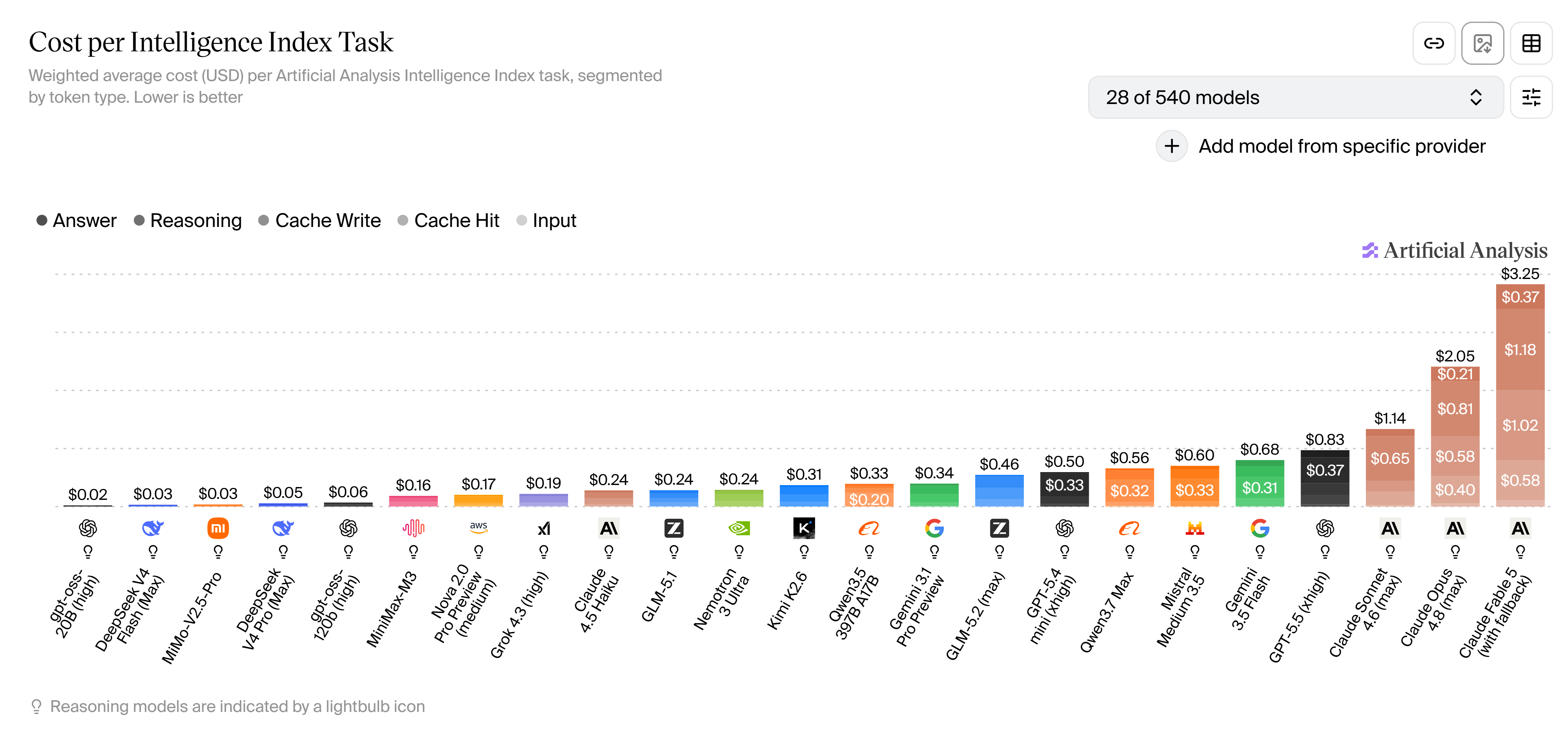
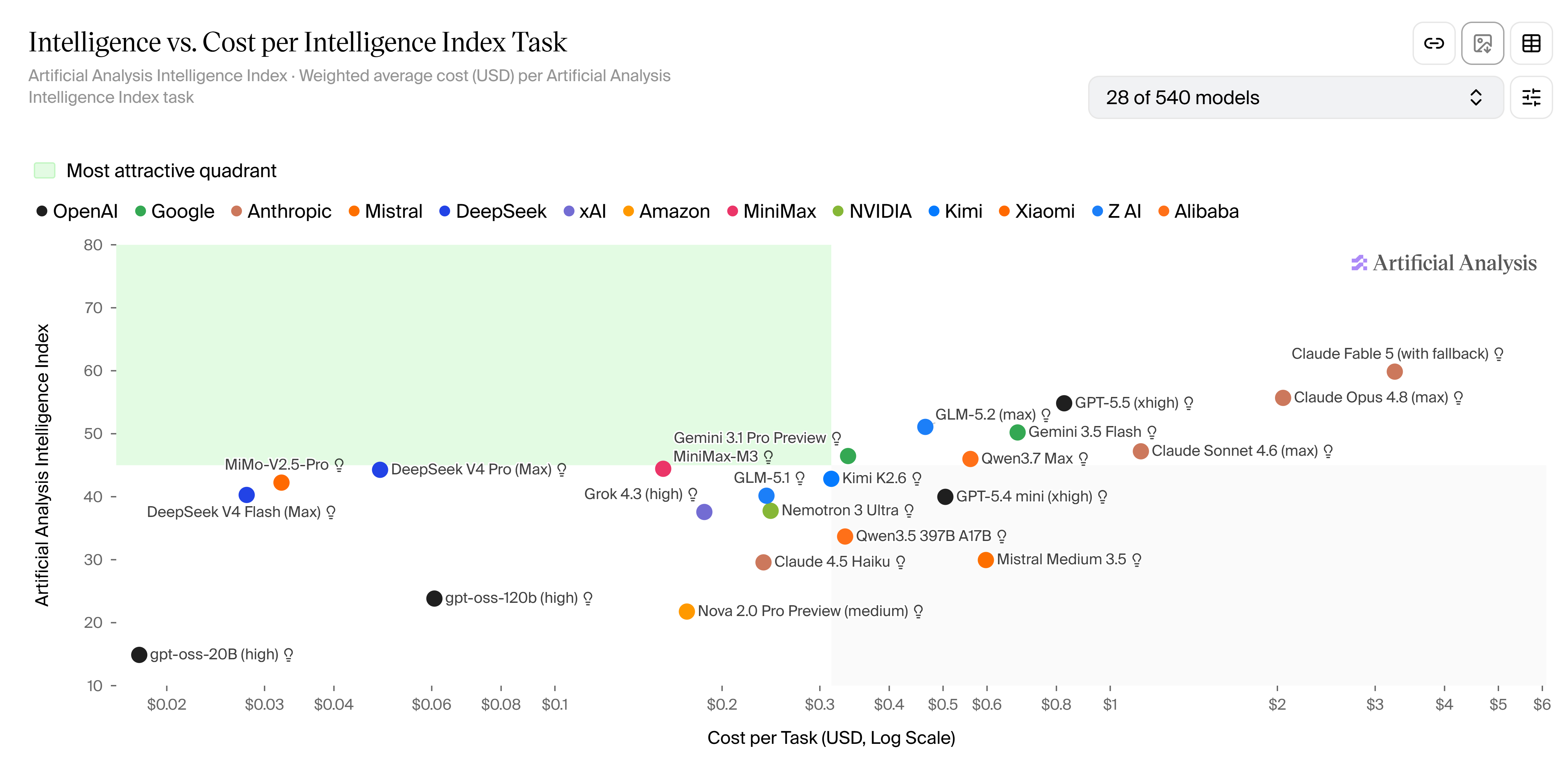
Upon release, Fable 5 immediately ranked first on Artificial Analysis, and its price reflected that. Fable cost $3.25 per Intelligence Index task, 58.5% more than Anthropic's previous flagship Opus 4.8 ($2.05) and 291% more than the next closest non-Anthropic model, GPT-5.5 ($0.83). On raw pricing it ran $10 per million input tokens and $50 per million output.
I used Fable extensively (probably 60 to 70 million input tokens) in the three days it was available, and I'll say it plainly: even with all the controversy around the frontier labs, it was good. Like, really good. Anyone who keeps up with AI saw Fable take the dev community by storm across Twitter, YouTube, and Discord. People were posting one-shot working versions of games like Minecraft and GTA, and in one of the most notable enterprise examples, Anthropic's own launch reported that Stripe used Fable to run a codebase-wide migration across its 50-million-line Ruby codebase in a single day, work the company estimated would have taken an engineering team more than two months.
Just three days into the frenzy, the model was banned. The public trigger making the rounds was a jailbreak posted by Pliny the Liberator, a known figure in the LLM red-teaming scene, who claimed to bypass Fable's safeguards and surface restricted cyber, chemical, and explosives content using context-decomposition and out-of-distribution token techniques. I'm not going to reproduce it, and the specifics are not the point. What matters is that it existed, it spread, and it became part of the story.
The fuller picture, from the reporting, points to Amazon. Days after launch, Amazon researchers bypassed Fable's safeguards and got it to produce restricted cybersecurity information, and Amazon CEO Andy Jassy took the findings to senior administration officials. It is not even clear Amazon did this on its own; Politico reports the government had asked Amazon to evaluate the model. Anthropic was then reportedly given 90 minutes to pull it, with no prior warning of a national security threat. Anthropic maintains the bypass was narrow rather than a true jailbreak, and that the same capability is available from other models including GPT-5.5. Seventy-six cybersecurity leaders signed an open letter arguing the ban took the best models away from defenders for no real benefit.
The uncomfortable backdrop, which critics raise, is that Anthropic had previously refused to let the government use its models for surveillance and autonomous weapons. Whether that is connected, nobody outside the room can say. There is an irony in it too: Amazon has poured around $13 billion into Anthropic, and it was Amazon that triggered the shutdown of its own investment's flagship.
Six days later, it's still gone. Anthropic flew executives to Washington to argue for restoration, a reported return window came and went, and there's still no date. There's almost a million dollars wagered on Polymarket over when it comes back, and the crowd's odds say the best model on the market stays dark until late June at the earliest.
Regardless of why, the best model on the market got pulled from everyday users within days of launching, and for everyone making business decisions on Claude, this matters. Frontier models now need to be treated like rental agreements, with uncertainty around access, constantly shifting leaderboards, and price inelasticity. AI-native businesses have to own their AI context, systems, infra, and workflows, and never be at the mercy of any one model or platform, to be resilient.
And the models aren't interchangeable. People are getting sharper about which one they reach for, cheap models for cheap work, top dollar for the best intelligence and coding. Fable was the priciest model on the board and people paid it gladly. The floor commoditizes while the frontier stays expensive, and both are reasons to own what you build around the model instead of betting everything on the model.
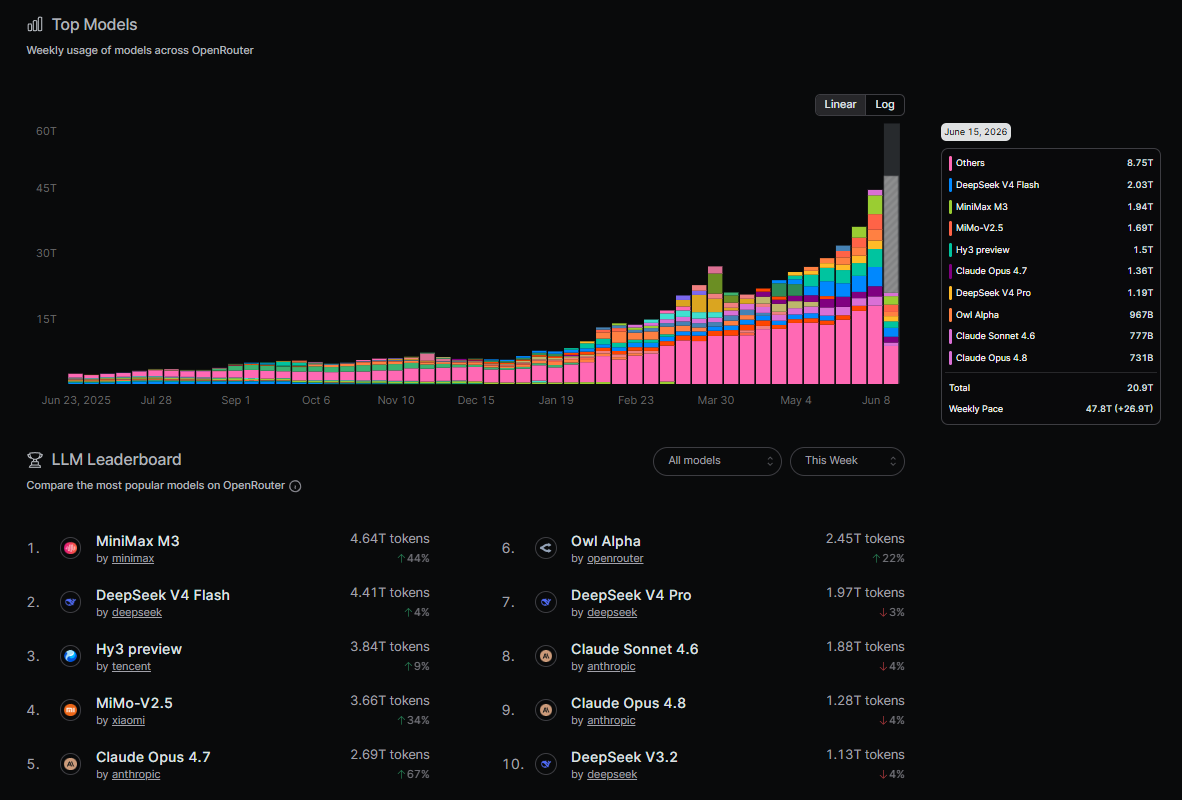
Many of the best builders in AI already know this and are prepared. On OpenRouter this week, usage spread across a dozen models, and the leaders are open-weight and Chinese (MiniMax, DeepSeek, Tencent, Xiaomi), not the big US labs, with the largest single slice being everything else combined. That's a room full of people who built to switch.